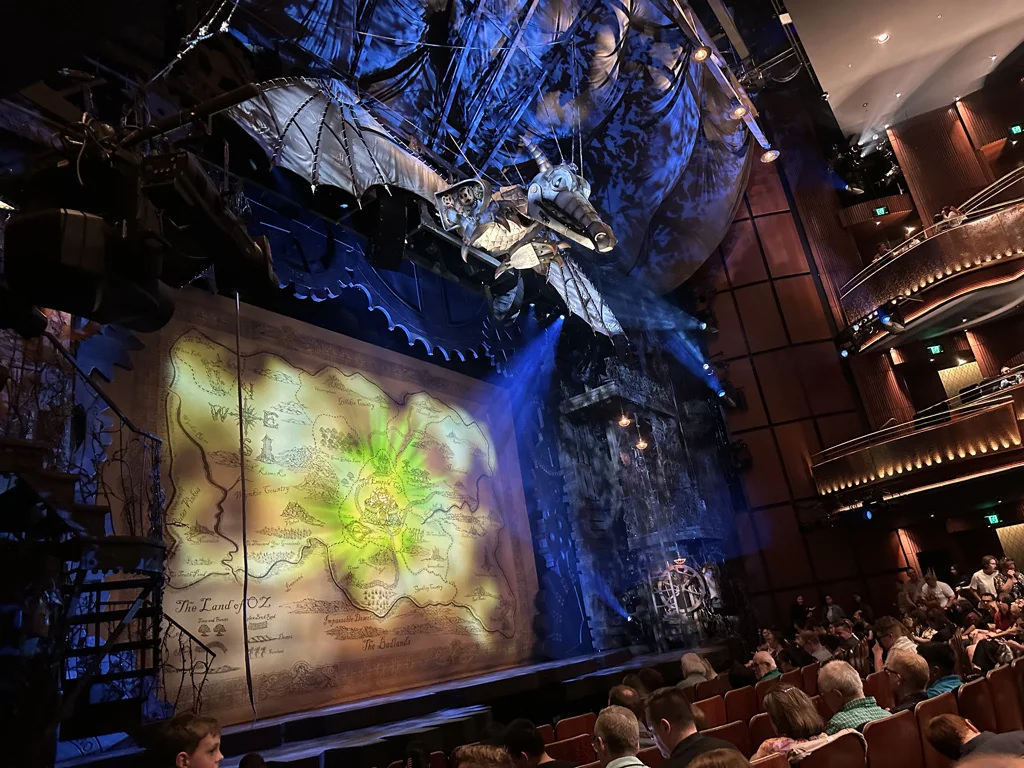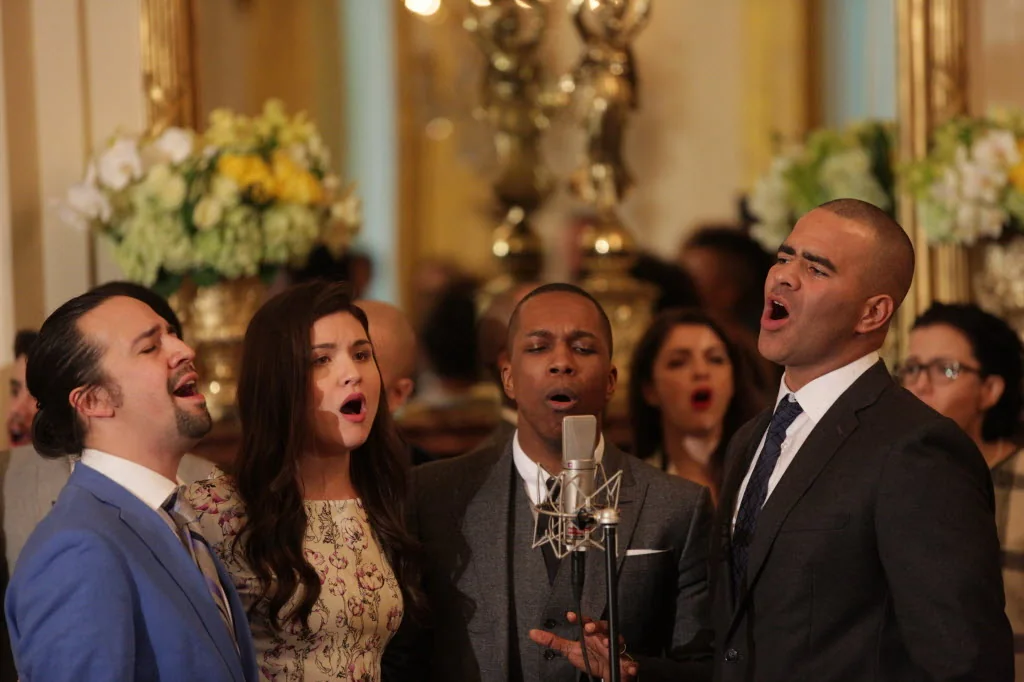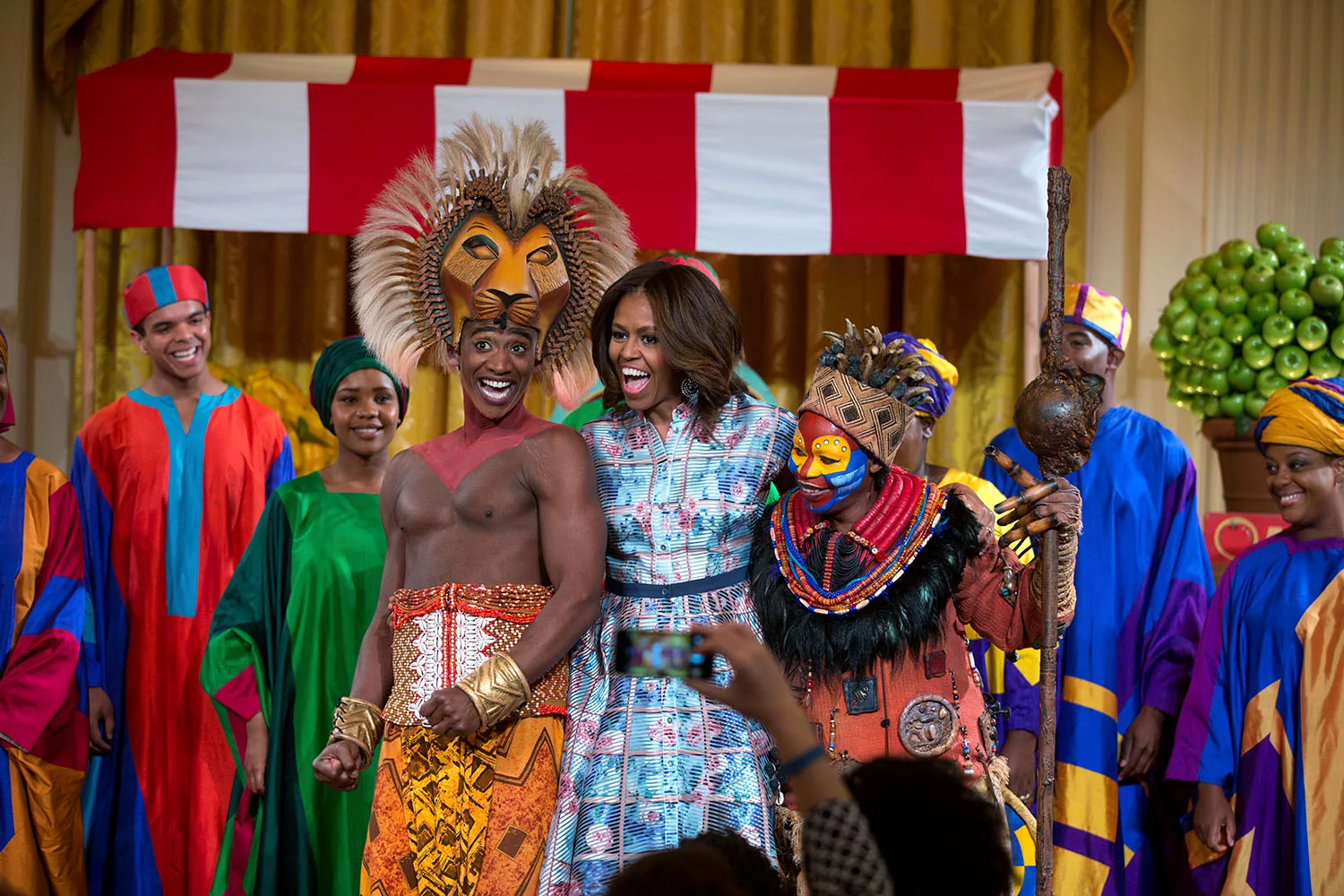
Picture two Broadway openings a year apart. At the Nederlander in 1996, a group of young artists gathers on a stage that looks like a place they might actually have to fight to keep. In 1997, animals come down the aisles of the newly restored New Amsterdam. You can see the performers carrying them. You can also see an audience discovering that an animated film could become something entirely different in the theatre.
Put those two rooms together and you get a better picture of the 1990s than you do from either show alone. Rent brought the pressures of making a life in New York into a Broadway house. The Lion King arrived as New York was actively rebuilding the district around it. Both had a lot to say about who the audience was and what the audience was willing to imagine.
Before Disney, there was a city plan
City and state officials set up the nonprofit New 42nd Street in 1990 to look after historic theatres on the block. The New Victory became a theatre for children and families. Disney’s restoration of the New Amsterdam, unveiled by Mayor Rudy Giuliani, Governor George Pataki, and Disney chairman Michael Eisner in 1997, was part of that larger effort. By 1998, city officials were talking about the new theatres, MTV studios, a subway entrance, and a major office building in the same breath. They were changing the mix of people and businesses on the street.
The city called that revitalization. The old shorthand that Disney “cleaned up Times Square” leaves out the planning, public investment, and decisions about which businesses belonged in the district. It also skips an interesting theatre question. When a city builds a district around visiting families and commercial entertainment, what kinds of shows can it support, and whose New York ends up onstage?

jbach, 2007 · CC BY-SA 2.0 · Resized and cropped for display · Source

Derek Jensen · CC BY 2.0 · Resized and cropped for display · Source

John Mathew Smith / www.celebrity-photos.com · CC BY-SA 2.0 · Resized and cropped for display · Source
The people who changed the decade
Howard Ashman and Alan Menken bring the songwriter into the story room
Ashman and Menken came to Disney with a way of writing songs that they had already tested in Little Shop of Horrors. Put a character in a place with rules. Give them a desire that conflicts with those rules. Let the song make the conflict audible. By the 1990s, the Disney films were using that approach to introduce whole communities. A lyric could establish what a town valued, and the animation could show you who was policing it. Ashman died in 1991, before Beauty and the Beast opened. Menken continued on Aladdin, with Tim Rice completing lyrics for songs Ashman had not written. The work mattered to Broadway because the score already knew how to organize a scene.
Jonathan Larson brings the East Village uptown
Larson borrowed the artists and precarious living arrangements of Puccini’s La Bohème and gave them a late-twentieth-century New York address. He wrote about the rent coming due, the work that still needed making, and a community living through AIDS. This was a New York of artists fighting to stay where they were, arriving on Broadway at the same time city officials were selling a different picture of the city to visitors. Larson’s rock score gave those characters a sound of their own. The point of the contemporary music was that the people onstage sounded like they lived in the present.
Julie Taymor and Michael Curry give the animal a visible operator
Taymor’s solution for The Lion King depended on showing two things at once. You can see the animal, and you can see the performer creating it. Michael Curry collaborated on the masks and puppets, while Richard Hudson designed scenery that left room for those images to register. Once the audience learns how to read a mask, a shadow, or a piece of fabric, the production can make an enormous change in scale with very little explanation. That is a different lesson from the British megamusical’s pursuit of mechanical spectacle.
Landmark productions
Rent (1996): Jonathan Larson and the artists trying to stay
Rent arrived on Broadway in 1996 and told a different story about who belonged in New York. Its artists and musicians struggle to stay in their homes and make work while friends are dying of AIDS. The downtown setting mattered. The East Village offered Jonathan Larson a place to locate a story about artistic ambition, queer community, and the cost of remaining in the city.
ACT UP’s organizing provides a context for that story. The group used demonstrations and direct action to push public institutions and drug companies to confront the epidemic. Meanwhile, federal arts funding was itself a political fight. The National Endowment for the Arts budget fell from $162.5 million in fiscal 1995 to about $99.5 million in fiscal 1996. The juxtaposition is revealing. At a time when Congress was cutting federal arts support, New York was making a highly visible bet on commercial entertainment. Those decisions operated at different levels, and they changed the conditions under which different kinds of theatre could be made and seen.
Look at what Paul Clay’s scenic design for Rent asks the audience to do. It gives the performers a shared environment that can become a room, a street, or a place to gather through changes in use and attention. The design leaves enough of the city visible to understand the characters’ circumstances while keeping the stage open to the next song.
Larson wrote the book, music, and lyrics. Director Michael Greif and choreographer Marlies Yearby had to make a rock score work inside an environment the actors could keep using. When the company comes together for “La Vie Bohème,” a table is enough to organize a room full of competing points of view. The actors make the table into a declaration of who belongs there. I find that more useful to study than a perfectly reproduced East Village apartment.
Beauty and the Beast (1991 film, 1994 stage): Howard Ashman and Alan Menken
The 1980s installment ends with the opening Ashman and Menken created for the animated musical. In Beauty and the Beast, they use a song to build Belle’s entire relationship to her village. The town sings back at her. We learn how everyone sees her while she is already thinking about getting out. Then “Be Our Guest” lets the castle make a completely different argument. A dining room that should be frightening becomes a place where the furniture wants an audience.
When the show opened at the Palace in 1994, director Robert Jess Roth, scenic designer Stan Meyer, and costume designer Ann Hould-Ward had to make that same promise with live bodies. An animator can give a teapot elbows for a few seconds and change its scale in the next shot. A stage costume has to let someone move, sing, and be readable from the back of the house. Disney was learning what it could carry over from animation and where the stage needed its own solution.
The Lion King (1994 film, 1997 stage): Julie Taymor shows the machinery
Beauty and the Beast (1991), Aladdin (1992), and The Lion King (1994) gave film audiences three different kinds of musical worlds. Animation lets a setting take part in a number. Furniture can perform, space can change scale, and the frame can move with the rhythm of a song. The success of that approach on screen gave Disney recognizable stories to take into the theatre.
The Broadway Lion King in 1997 shows how much can change in that translation. Julie Taymor’s staging, the masks and puppets she designed with Michael Curry, and Richard Hudson’s scenery give audiences a new way to see the story. In the opening procession, the audience has to turn and find the animals entering through the house. That changes the audience’s position in the scene. In the film, the camera decides when we see the crowd and when we see the rock. In the theatre, Taymor can spread that event across the room. We can see the person making the animal move, and that becomes part of the pleasure. The stage has its own way of moving attention from a performer to a creature and back again.
Cinderella (1997): Brandy, Whitney Houston, and the living room audience
That same year, ABC broadcast Rodgers and Hammerstein’s Cinderella with Brandy as Cinderella, Whitney Houston as the Fairy Godmother, and Paolo Montalban as the Prince. Houston was also an executive producer. Rob Marshall choreographed the broadcast before directing Chicago. This is another route between the old Broadway songbook and a new audience, and it reached viewers who did not need a ticket to a restored theatre.
The casting changes who gets to be recognized inside a familiar fairy tale. That matters as much as the size of the ballroom. Seen against the transformation of 42nd Street, Cinderella asks a related question through a different medium. Who gets invited into the story, and what happens when the audience sees someone there whom previous versions rarely put in that role?
How the decade changed the stage picture
Take three objects from these shows: the table in Rent, the enchanted objects in Beauty and the Beast, and a mask in The Lion King. Each tells the audience how to watch. The table has an ordinary use that the ensemble can turn into a performance. A costume makes a performer read as a household object while leaving them enough movement to play a scene. A mask keeps the actor visible even while the character reads as an animal. In all three, the designer has to decide which part of the transformation the audience needs to see.
That is also the difference between reproducing a film and adapting it. A stage designer cannot cut from a close-up to a wide shot, but a performer can change the audience’s focus by moving, revealing a silhouette, or handing an object to somebody else. The strongest adaptations find a stage action that can do the work of a cut.
What the decade changed
Put Rent and The Lion King side by side and the decade gets more interesting. One asks us to recognize the people whose lives are easily left out of a redevelopment story. The other uses a restored playhouse and visible theatrical craft to turn a familiar film into a reason to visit Broadway. Both found audiences. Both show how a musical can make a claim about the world through the space it gives its performers.
Frequently asked questions
Did Disney lead the redevelopment of Times Square?
Disney restored the New Amsterdam Theatre within a larger redevelopment effort involving New York City, New York State, and other institutions and developers.
Why discuss Rent alongside Disney?
The two musicals were playing on Broadway during the same transformation of New York, and they offered very different pictures of the city and the people it was for.
Where does The Little Mermaid fit?
The 1989 film belongs to the 1980s installment. This article follows Disney’s animated musicals and stage adaptations of the 1990s.
What did Taymor change when The Lion King moved to Broadway?
The stage version makes puppeteers visible and sends the procession through the auditorium. The audience experiences the opening as something happening in the room.
What carried over from the British megamusical?
Scale, memorable visual images, and the idea of a show that could travel. Disney also brought recognizable film stories and built new ways to tell them with live performers.
Sources and further reading
- NYC archive on the 1997 New Amsterdam restoration
- NYC Mayor’s Management Report on the city–state 42nd Street project
- NYPL ACT UP New York records
- Library of Congress musical theatre and film overview
- National Endowment for the Arts appropriations history
- Rent production credits
- The Lion King production credits
- New 42nd Street testimony on its founding and the New Victory
- NYC archive on the theatres, MTV studios, and 4 Times Square
- Beauty and the Beast Broadway production credits
- Disney’s archive on the 1997 Cinderella broadcast
- Disney archive on the transition from the animated film to the 1994 production
- Disney on Ashman, Menken, and their film collaborations