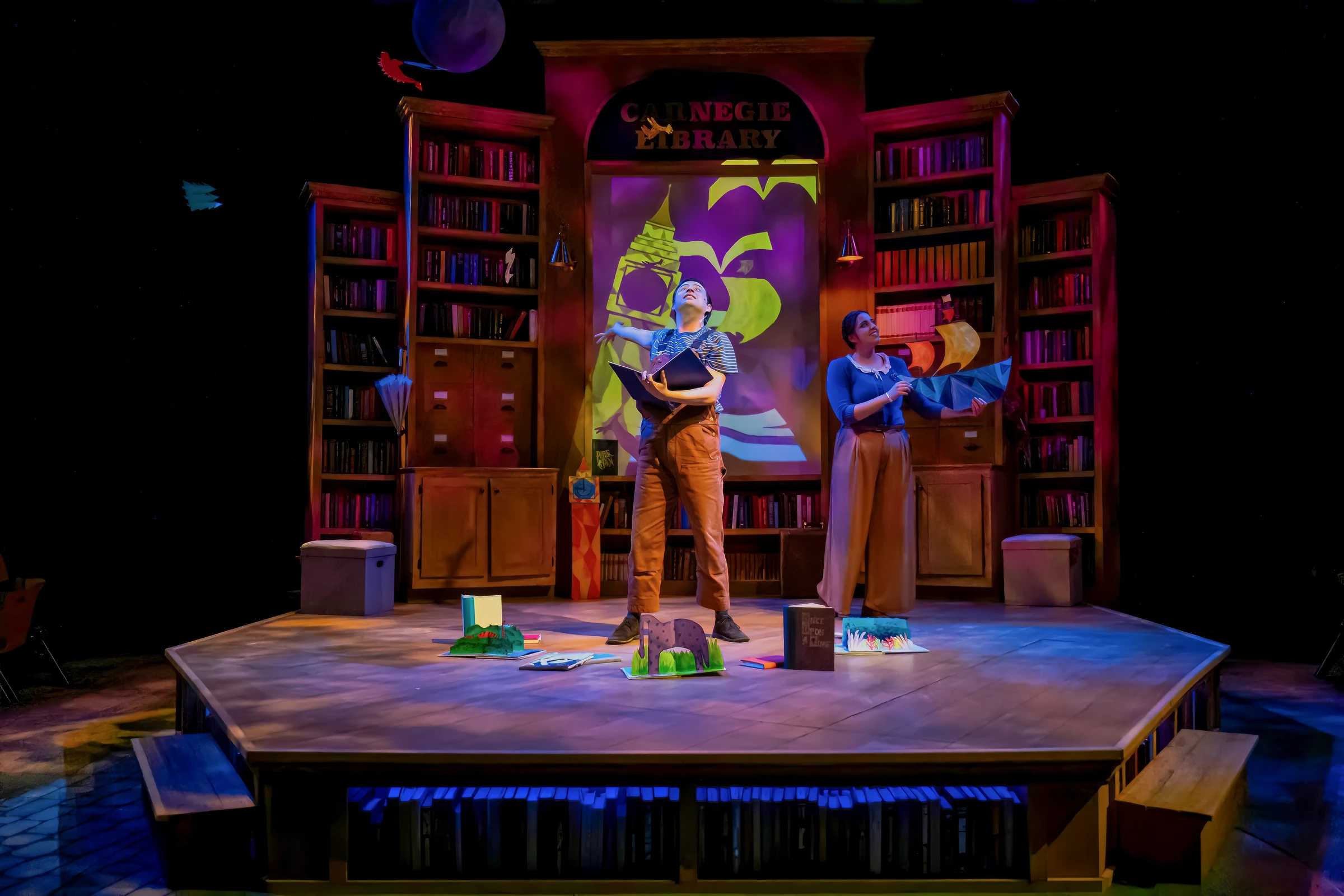
The part of Tomás and the Library Lady I wanted to get right was the bookcase. For Sara Rodriguez’s production at Lake Dillon Theatre Company, I wanted the library to feel like a place a kid could walk into and know what to do. You can get a lot of that from the height of a shelf, a row of drawers, or the way the wood wraps around you. Once that much of the room is there, you have a lot of freedom with what happens in front of it.
The original research
I started with two kinds of images. The farmwork board is about the world Tomás brings with him. Pat Mora’s book starts with a family traveling for seasonal work and a grandfather who tells stories. That part matters to me because Tomás already knows what a good story can do before anybody hands him a book.

Farmwork and family photographs from my original scenic research.
The library board is where I worked out what the room could feel like. I kept coming back to the built-in shelves, warm wood, and arched openings. If I could get those details into the bookcase, the rest of the stage could stay open for Sara and the actors.
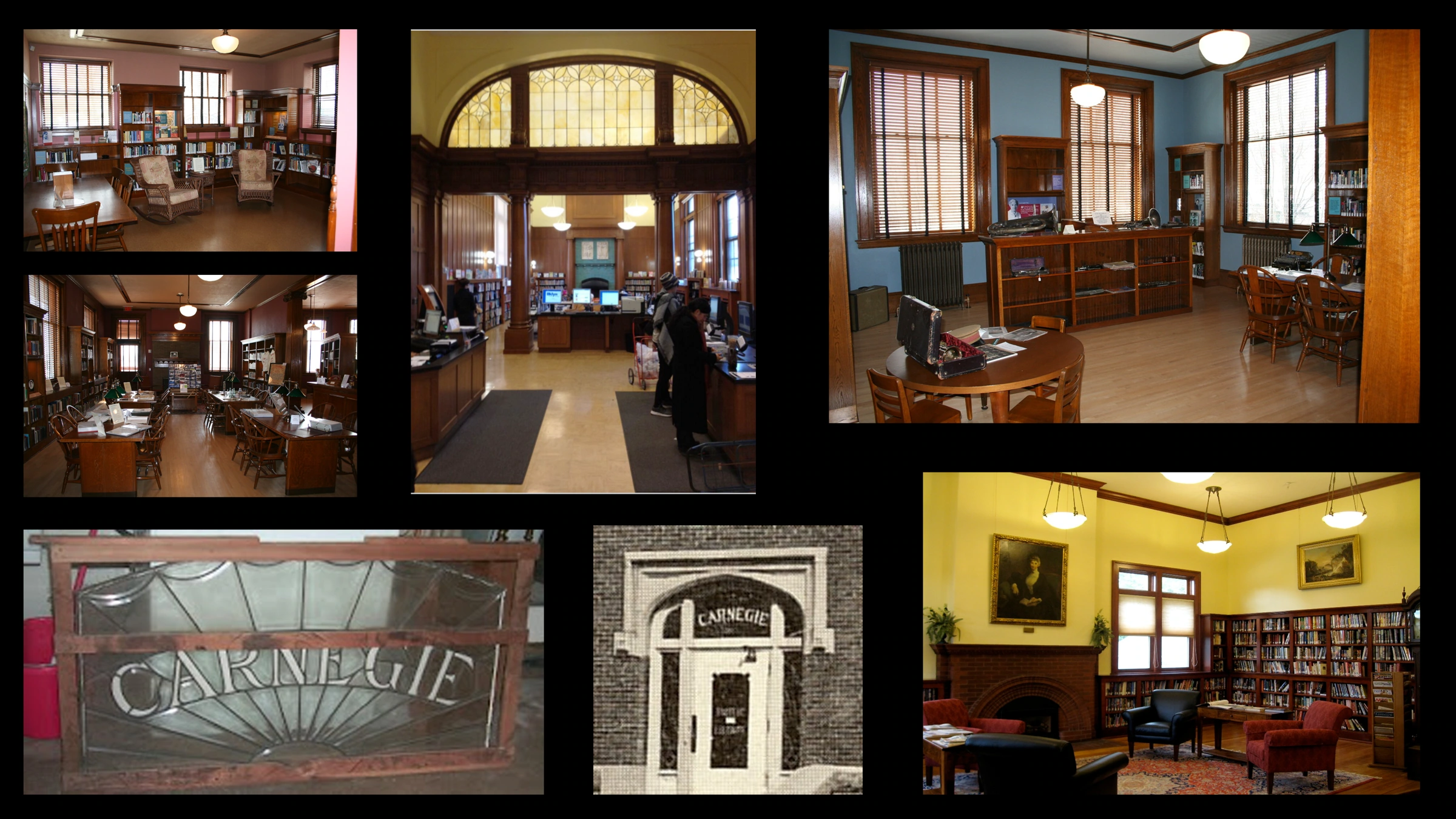
Library interiors and architectural details from my original scenic research.
From research to rendering
The color rendering shows where that landed. I gave the bookcase a tall center and lower cases on either side. The wood and the sign tell you where you are, and the platform in front gives the actors room to leave that place and come back to it. The wide library rendering shows another view with the shelving stretched across a full wall.
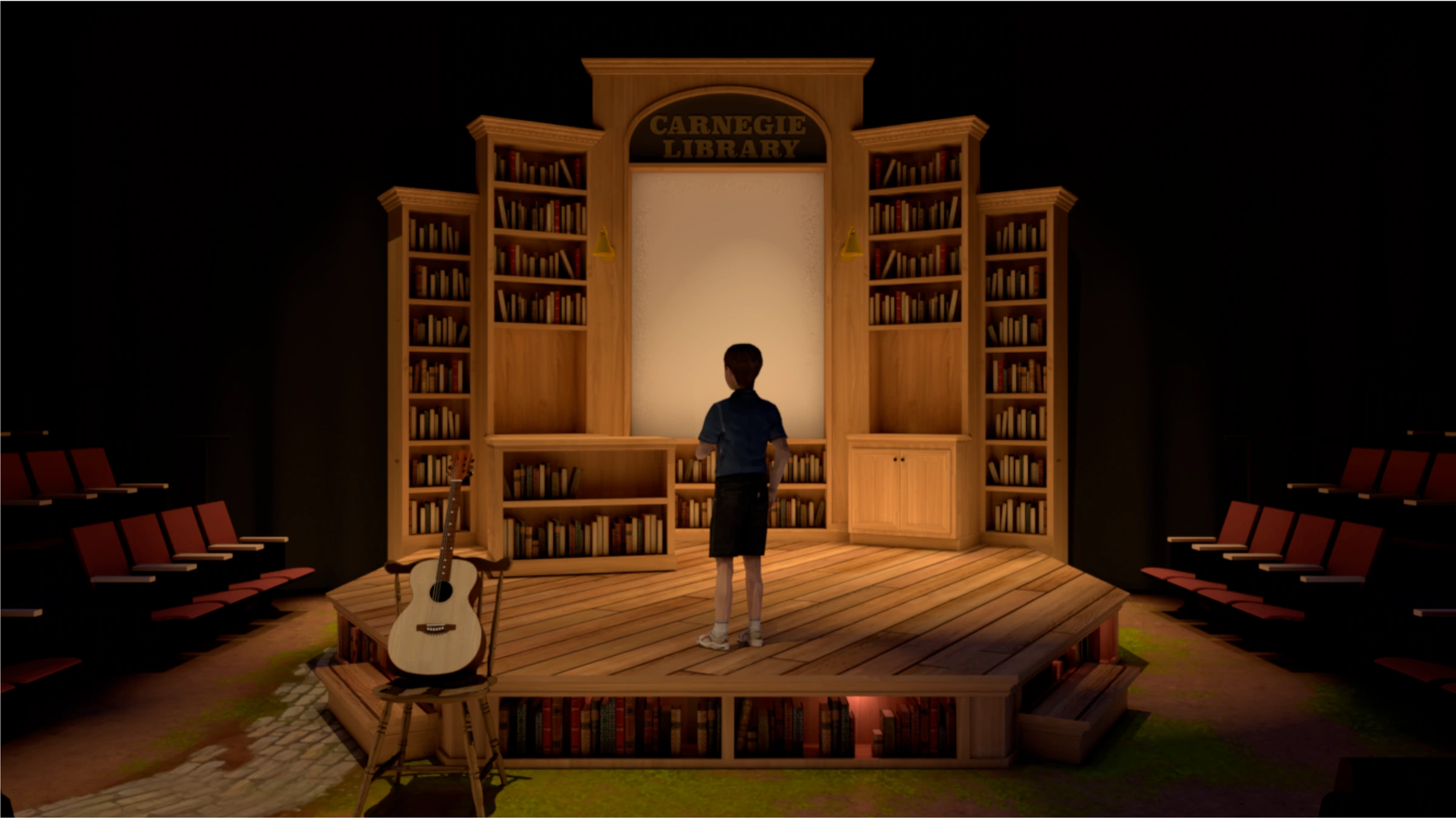
Color scenic rendering by Brandon PT Davis.
What the paint drawings tell you
The paint plates show where the room gets its shape. I could use a diagonal wood pattern to carry the eye across the deck. At the back, the library sign, shelves, and trim frame a large, pale opening. Looking at the floor plan and the bookcase elevation together, you can see how much of the design comes down to where the detail sits and where there’s room to move.
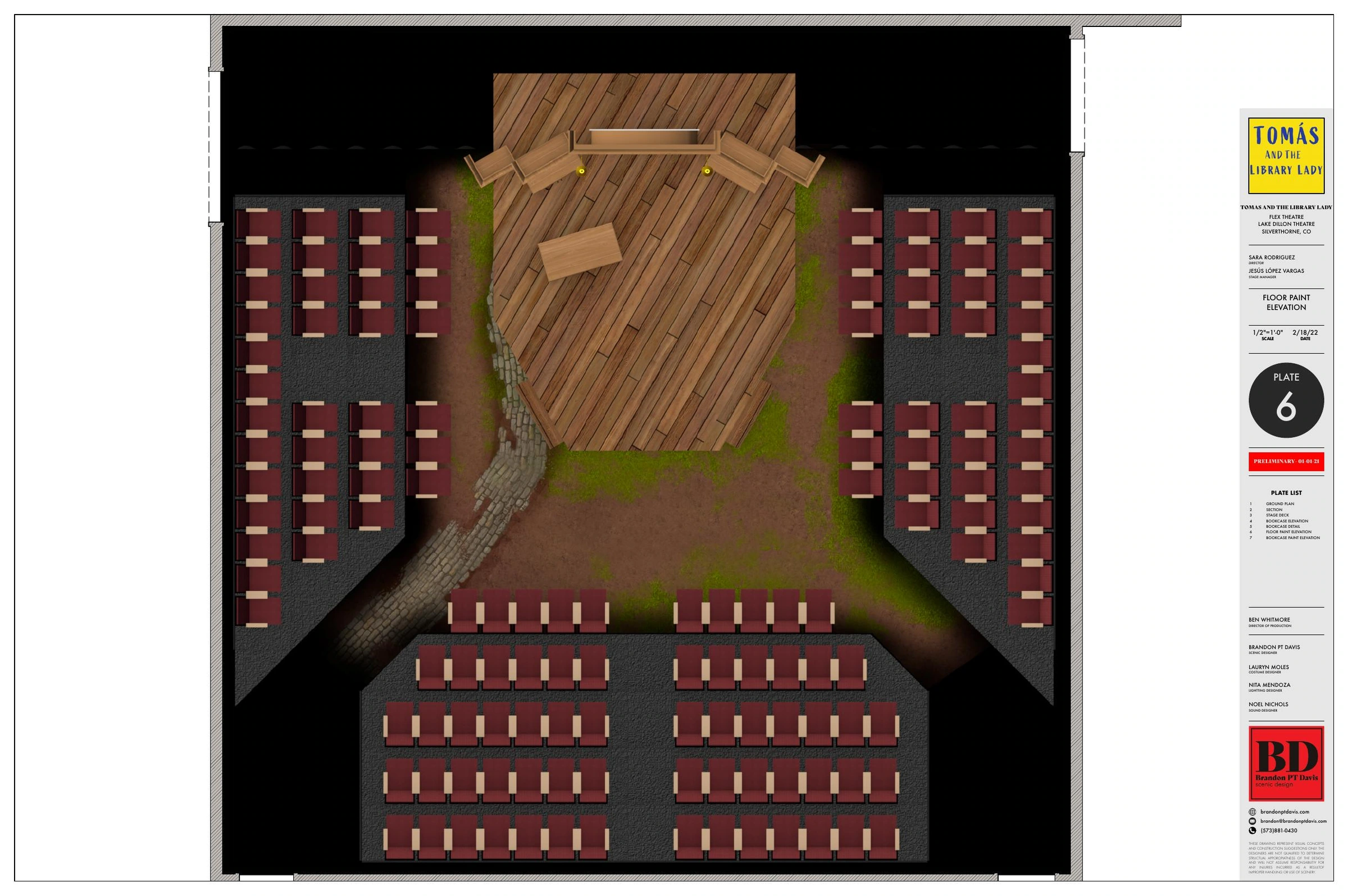
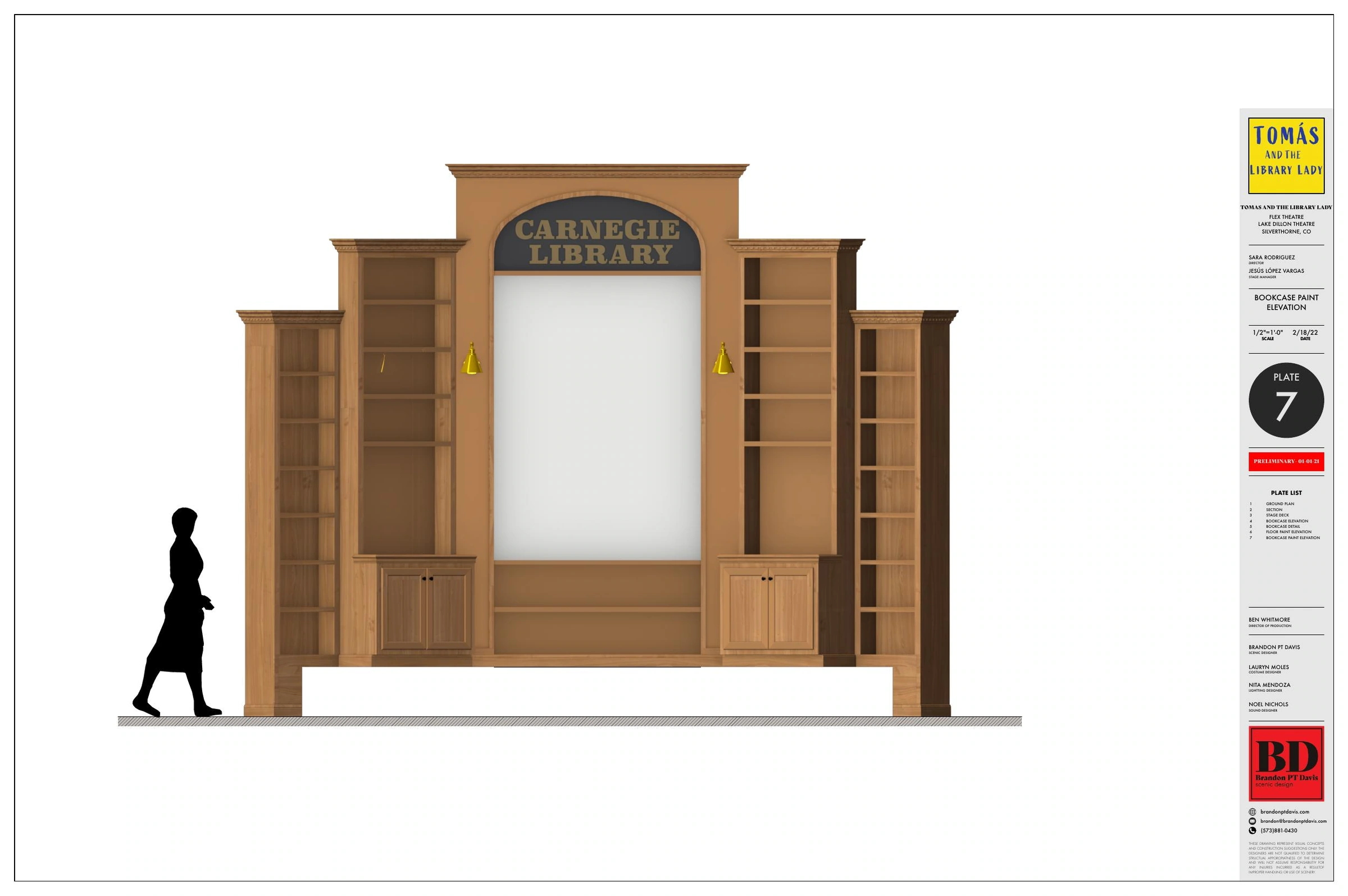
The floor paint plan and bookcase paint elevation.
I left the middle of the bookcase open for projection. I made the library-door cues so the opening could read as the entrance to the library. The road cue gives that same opening a long view into the distance. I like how those two images give you a sense of traveling and then arriving, all within the same piece of scenery.
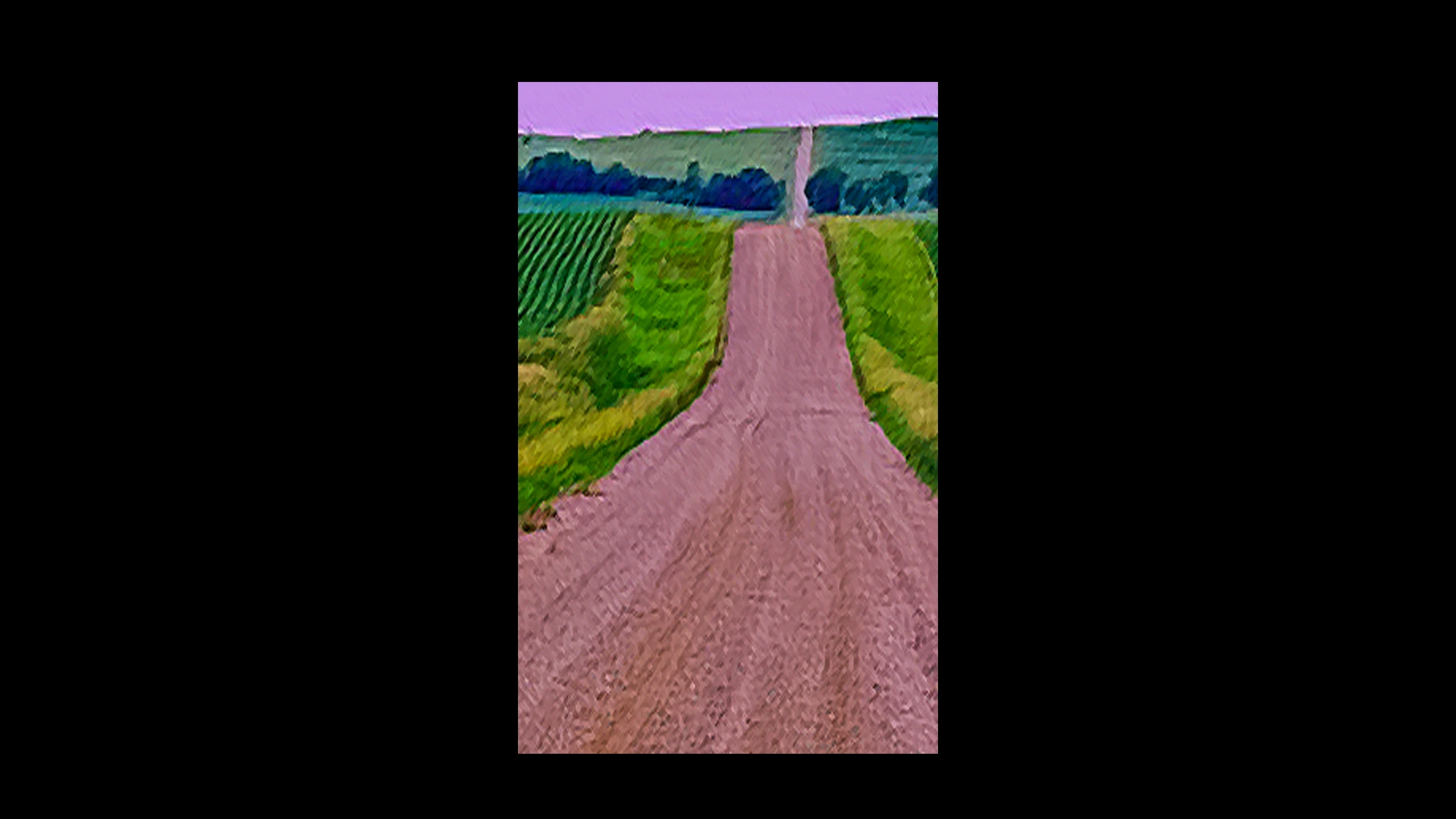
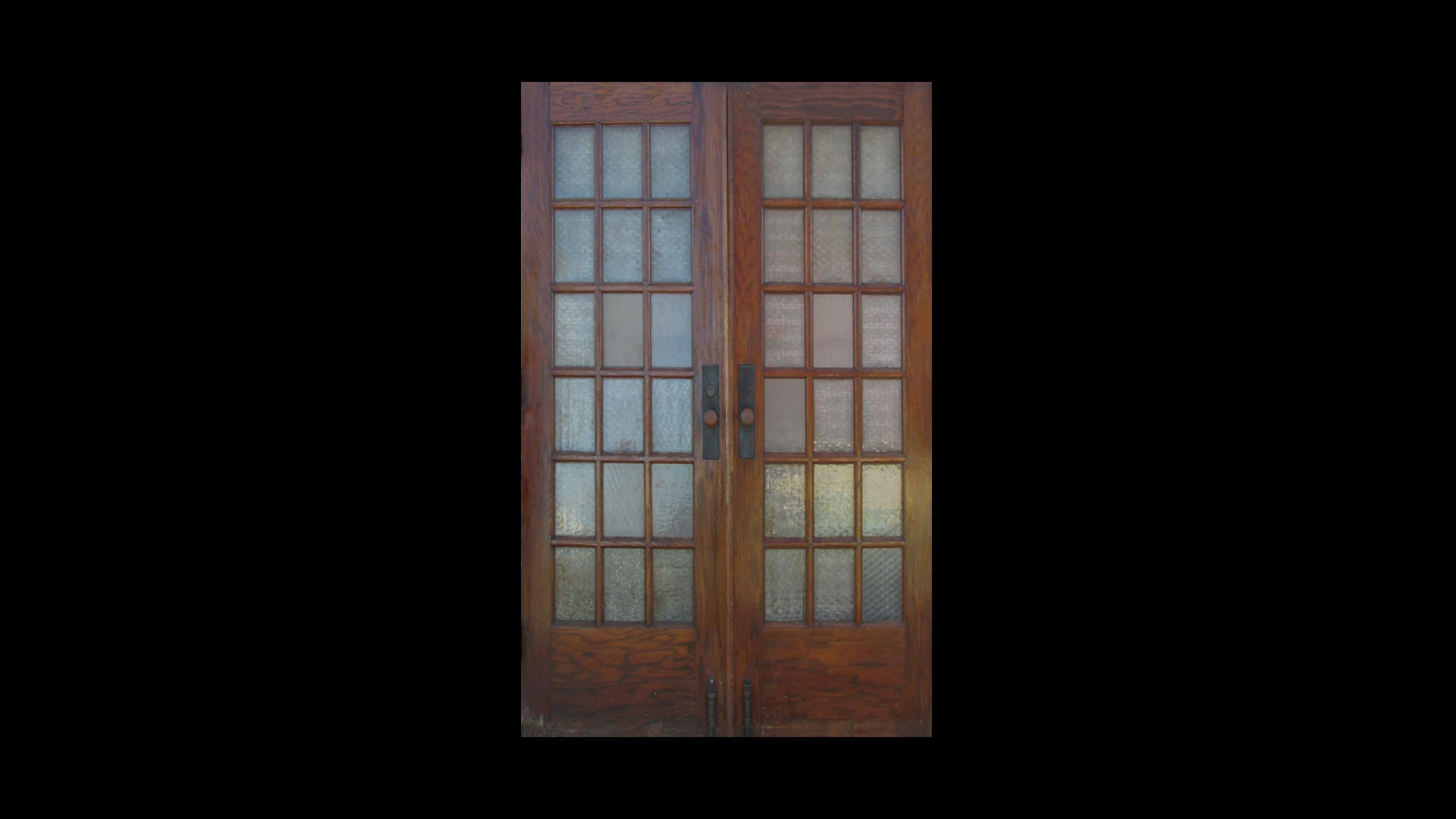
Road and library-door projection artwork. Library-door cues by Brandon PT Davis.
In the production photo, a projected figure fills that opening. There’s still a shelf full of books on either side, and suddenly the center of the room belongs to a story. That’s the part of the set I keep coming back to. A familiar piece of furniture can take us somewhere we haven’t been.
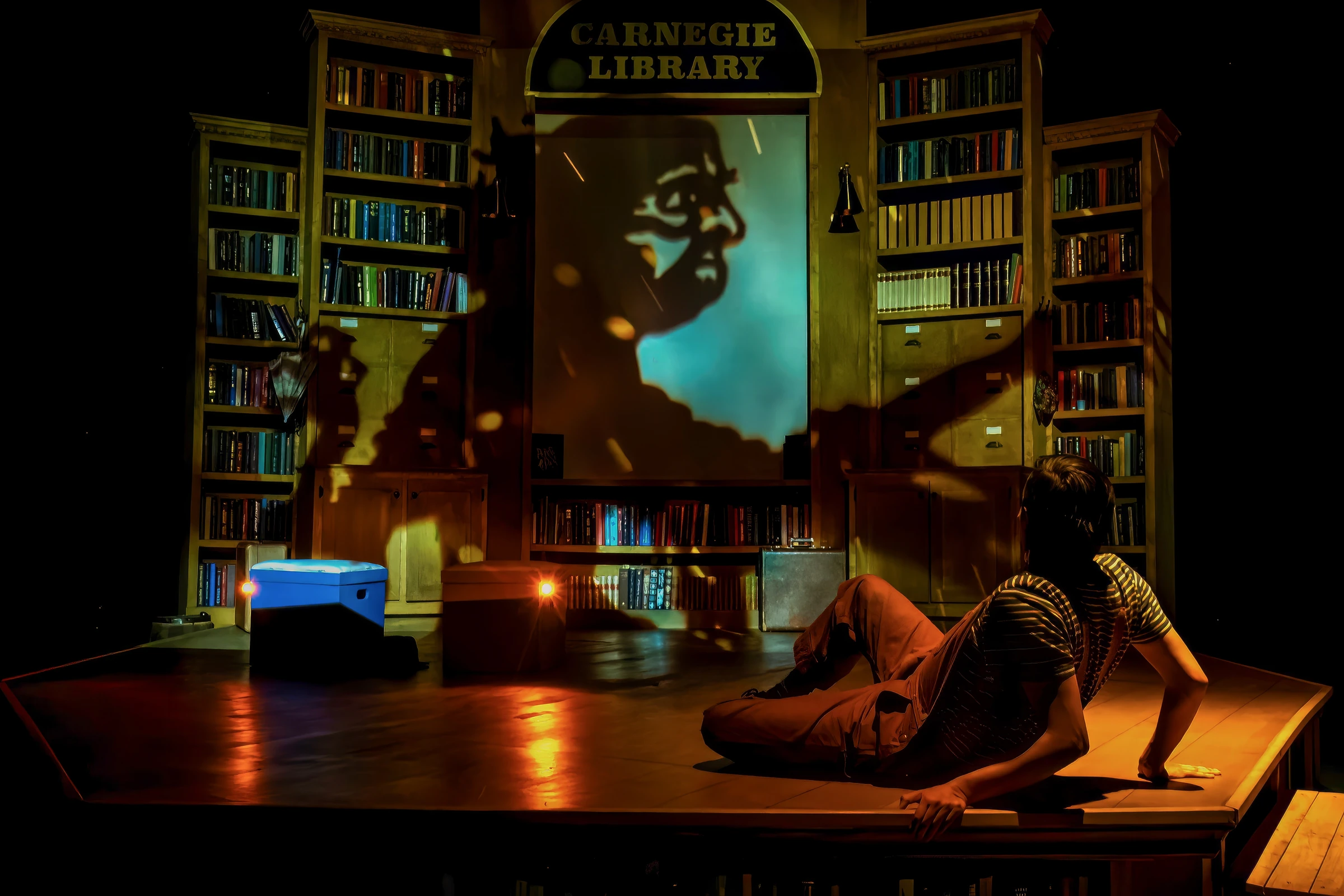
Projection design by Jesús López Vargas.
The production
Sara Rodriguez directed the 2022 Lake Dillon Theatre Company production. I designed the scenery. Lauryn Terciera designed costumes, Nita Mendoza designed lighting, Noel Nichols designed sound, and Jesús López Vargas designed projections. I also made the library-door cues. José Cruz González adapted the play from Pat Mora’s book, illustrated by Raúl Colón.
View production photos and credits · Explore the scenic artifacts