When I got the text about Million Dollar Quartet, I had two questions. How much of the earlier production would carry over? And what would it be like to share a set design with another scenic designer? I knew Efren Delgadillo Jr., and I was a little nervous. This was my first co-design and our first time working together.
The production was originally meant to be a remount of the 2022 Outside SCR show at Mission San Juan Capistrano. Efren had designed that set and James Moye had directed it. When we met with James to talk through early ideas, one of the things we wanted to carry onto the Segerstrom Stage was that feeling of being inside a concert. James returned for the 2025 production, with Kim Martin-Cotten co-directing. 2022 Outside SCR production · 2025 Segerstrom Stage production
Efren and I started by doing research on our own and then comparing notes. That back-and-forth became the way we worked. We’d each bring in ideas and talk them through, and pretty soon one idea would change how we saw another. For this show, the “co” in co-design really stood for collaborative.
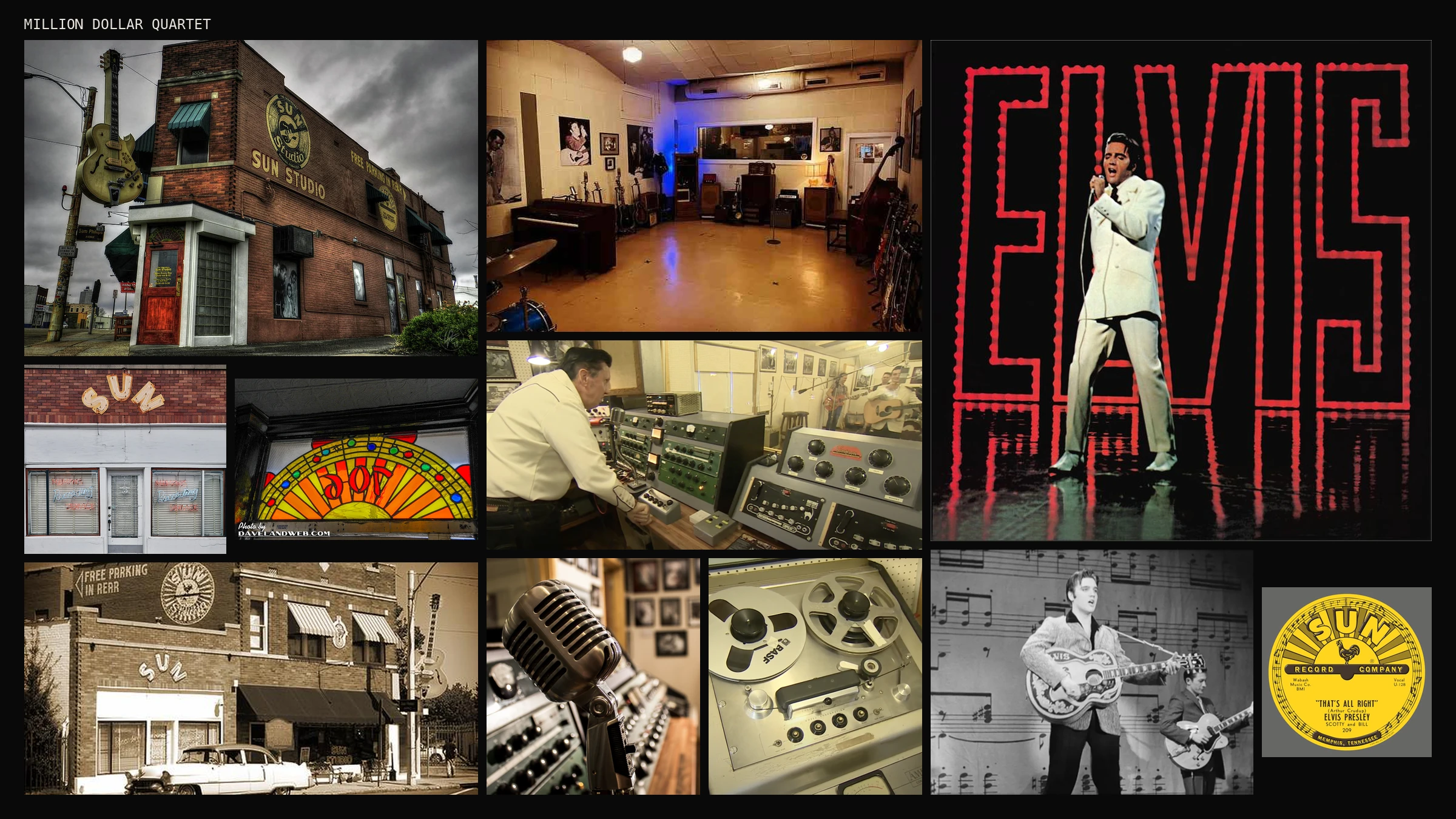
The research board puts the references for the recording room alongside the ones for the finale. Explore the mood board.
One of the first things we talked about was the ending. The audience spends the evening inside Sun Studio with four musicians in a room. By the finale, we wanted those same people in the seats to feel as if they were at a concert in the 1950s. The drawings kept coming back to the same question. How much of the room would you still need to see once the concert started?
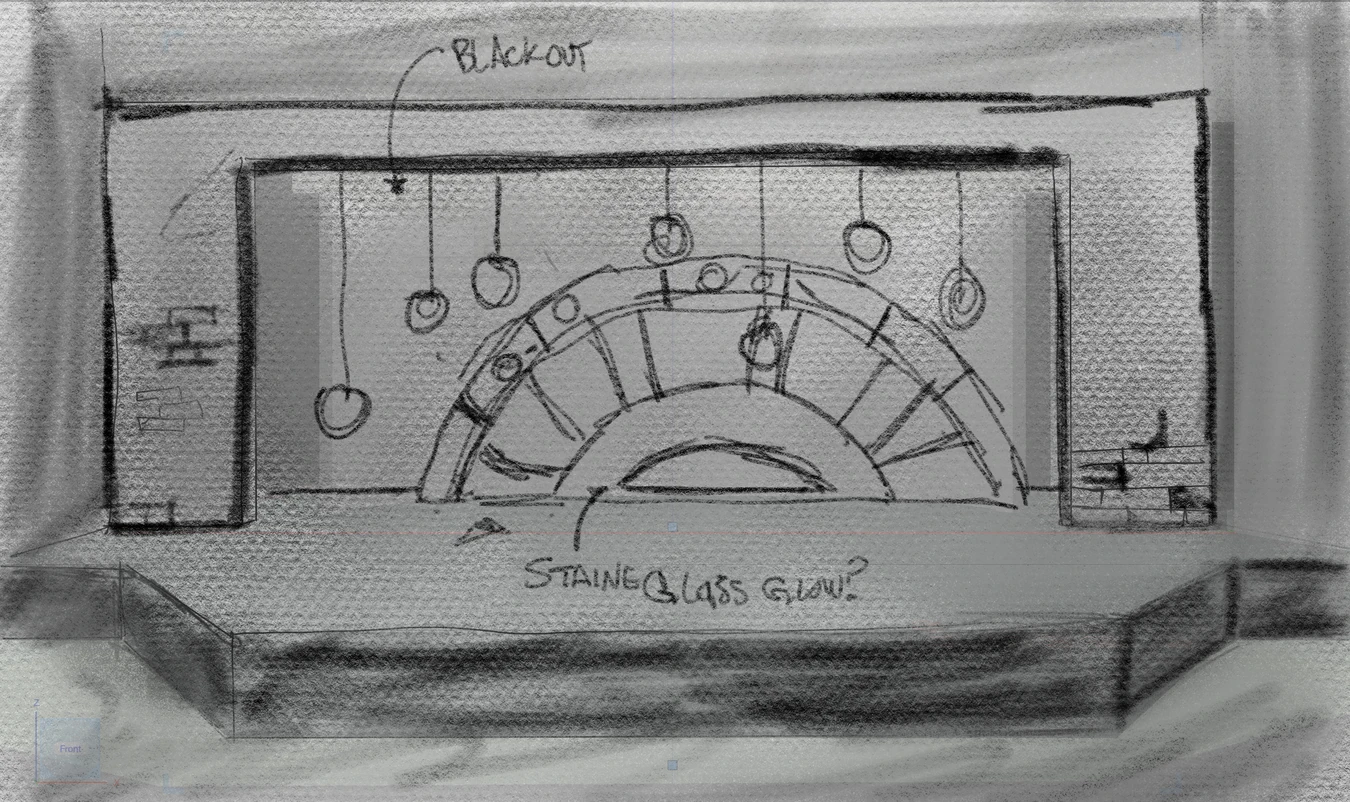
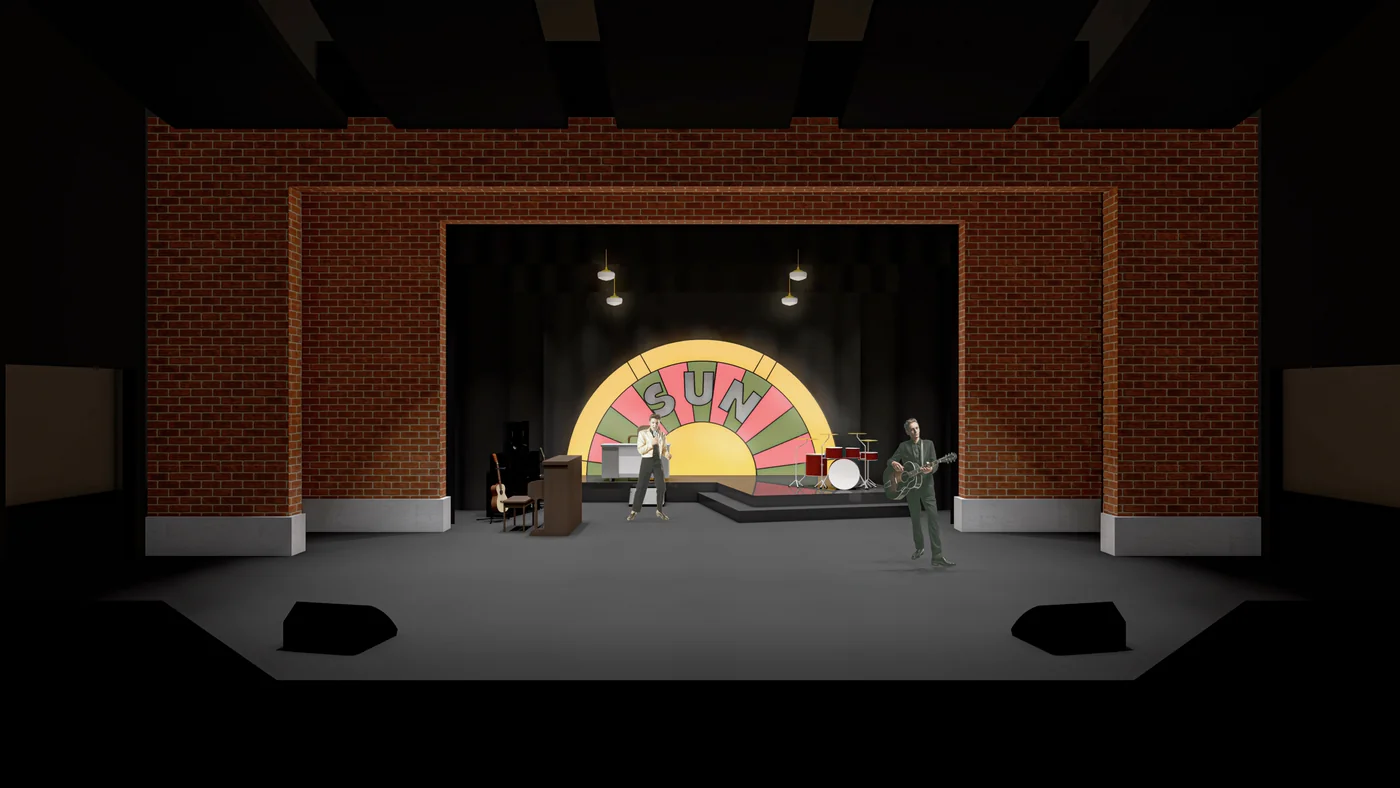
An April sketch asks “Stained Glass Glow?” The rendering shows one version of that semicircular SUN motif inside the brick opening.
The room and the city
I thought of the recording booth as the history side of the set. I spent a lot of time looking at photographs of Sun Studio and working out which details would make the room feel right. One of my favorite wins was sourcing the acoustic tile. On the booth elevation, you can see the one-foot-square, straight-drilled panels called out around the window. Finding that pattern was one of the small things that made the room feel like a working recording studio.
The big control-room window gives you a sense of how the room works before anybody tells you. Once our props team put equipment behind the glass and lighting designer Lonnie Rafael Alcaraz lit it, there was a whole little show going on in the space where Sam Phillips worked.
Lonnie was my mentor in graduate school at UC Irvine, and designing a show with him had been on my bucket list. That little booth is where you can see our work come together.
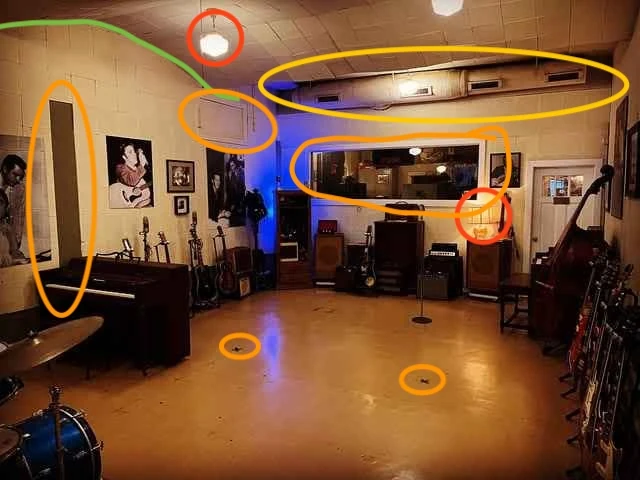
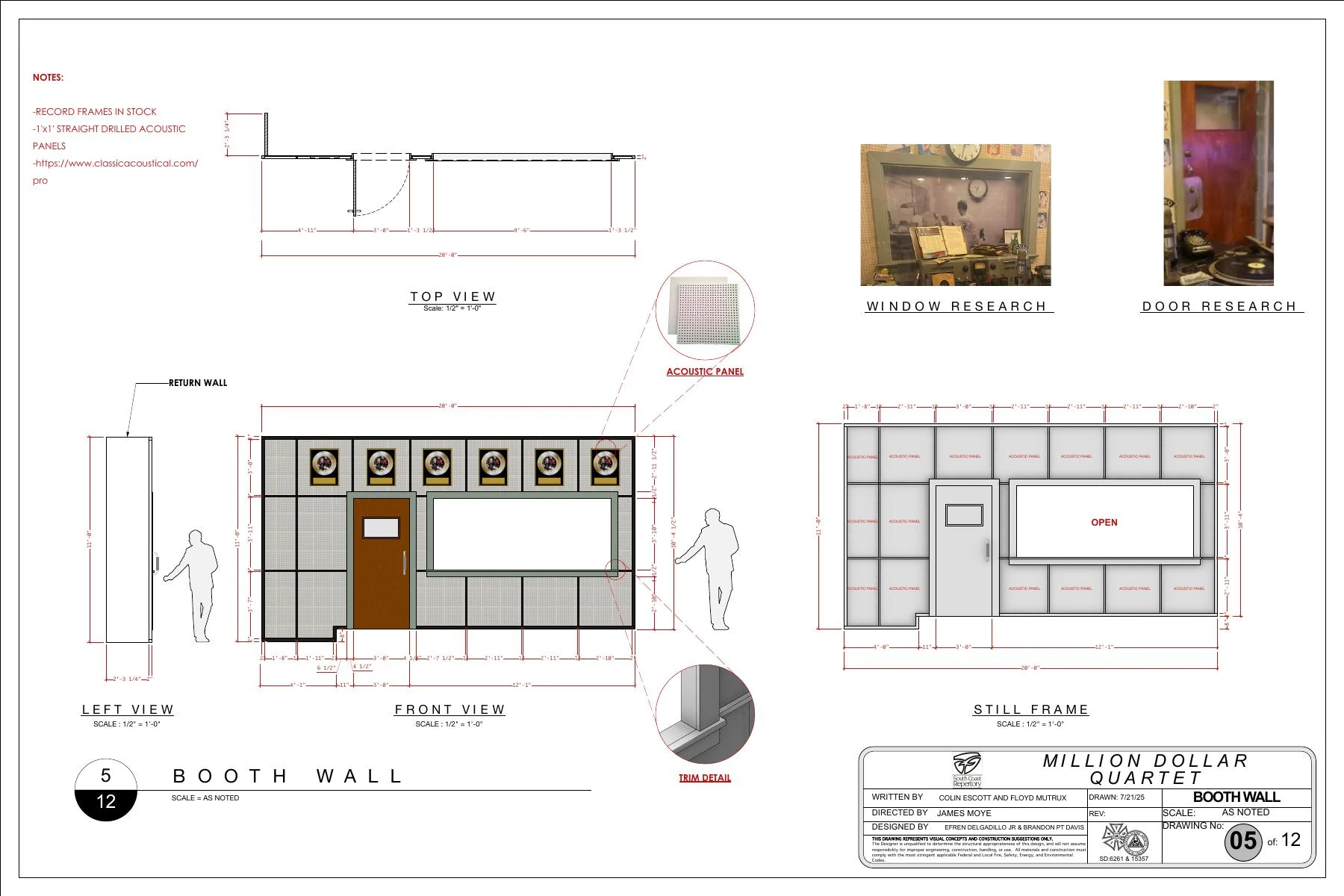
Sun Studio research and plate 5 from the July scenic set. Look for the control-room window in both images, then follow it into the September 10 tech photo.
Across the stage was the theater side. I kept thinking about a tobacco warehouse in Kentucky that housed a scene shop early in my career. I wanted the set to have some of that feeling and to be grounded in the part of the country these musicians came from. Carl Perkins was from Tennessee, Johnny Cash from Arkansas, Elvis Presley from Mississippi, and Jerry Lee Lewis from Louisiana. Memphis was where all four came together. Sun Records’ history
The brick brought some of that warehouse texture into the studio, and we worked the Sun Records graphic into the wall. In the paint elevation, you can follow the graphic across the brick around the door and window. The photograph of the finished wall shows how much of it you could still see onstage.
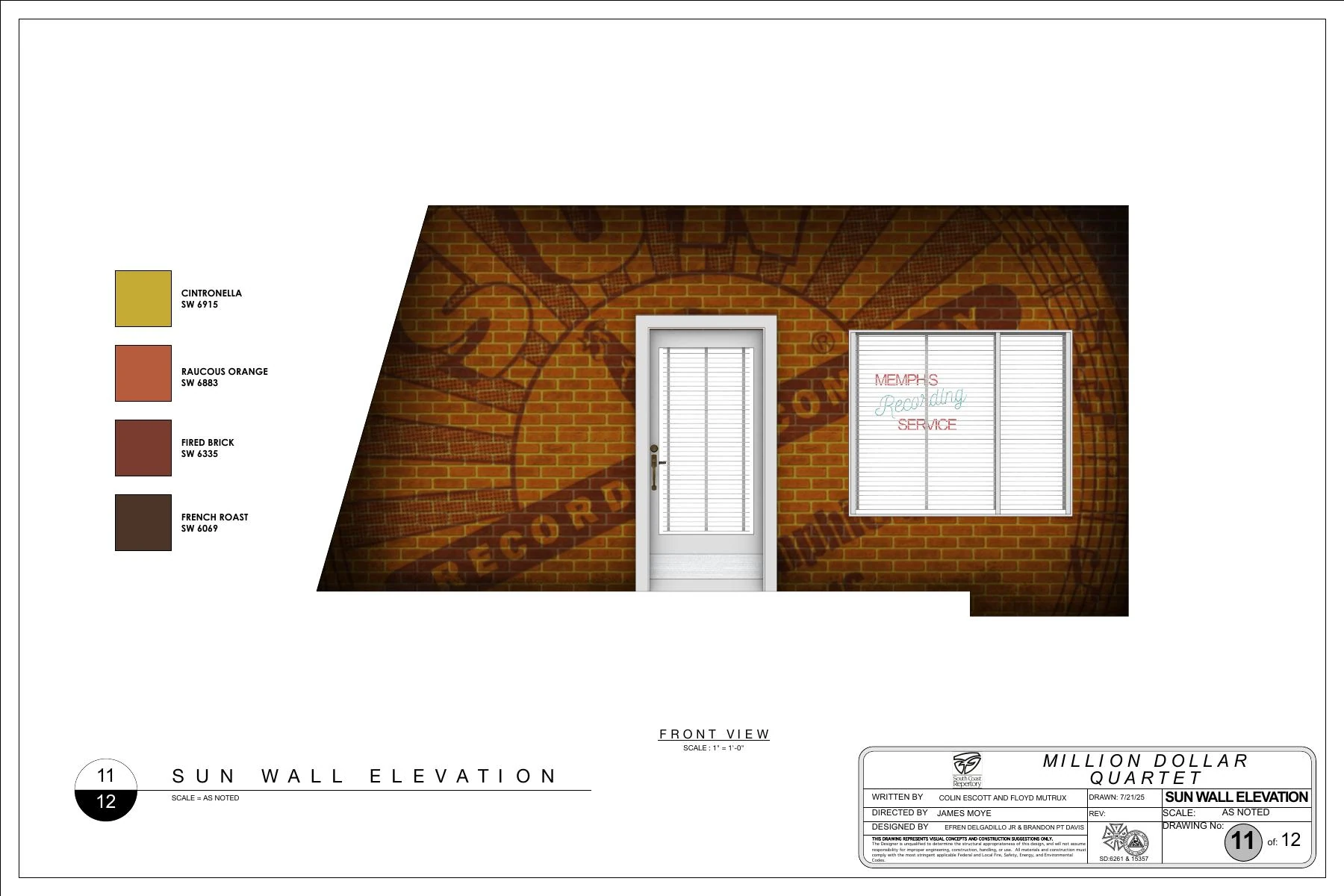
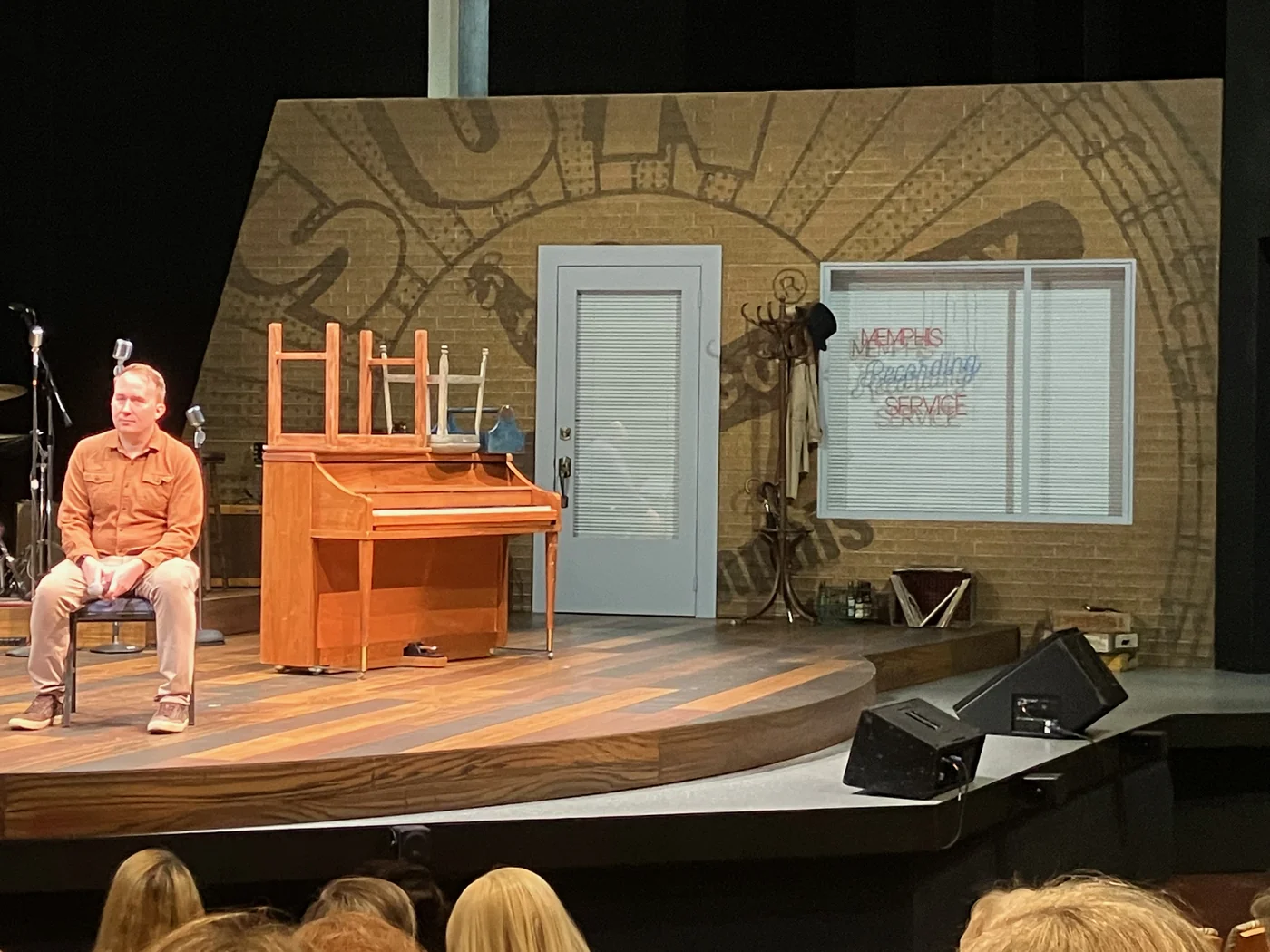
Plate 11 and the built SUN wall. The September 27 photo also catches the varied plank tones and curved edge of the deck, drawn separately on plate 10.
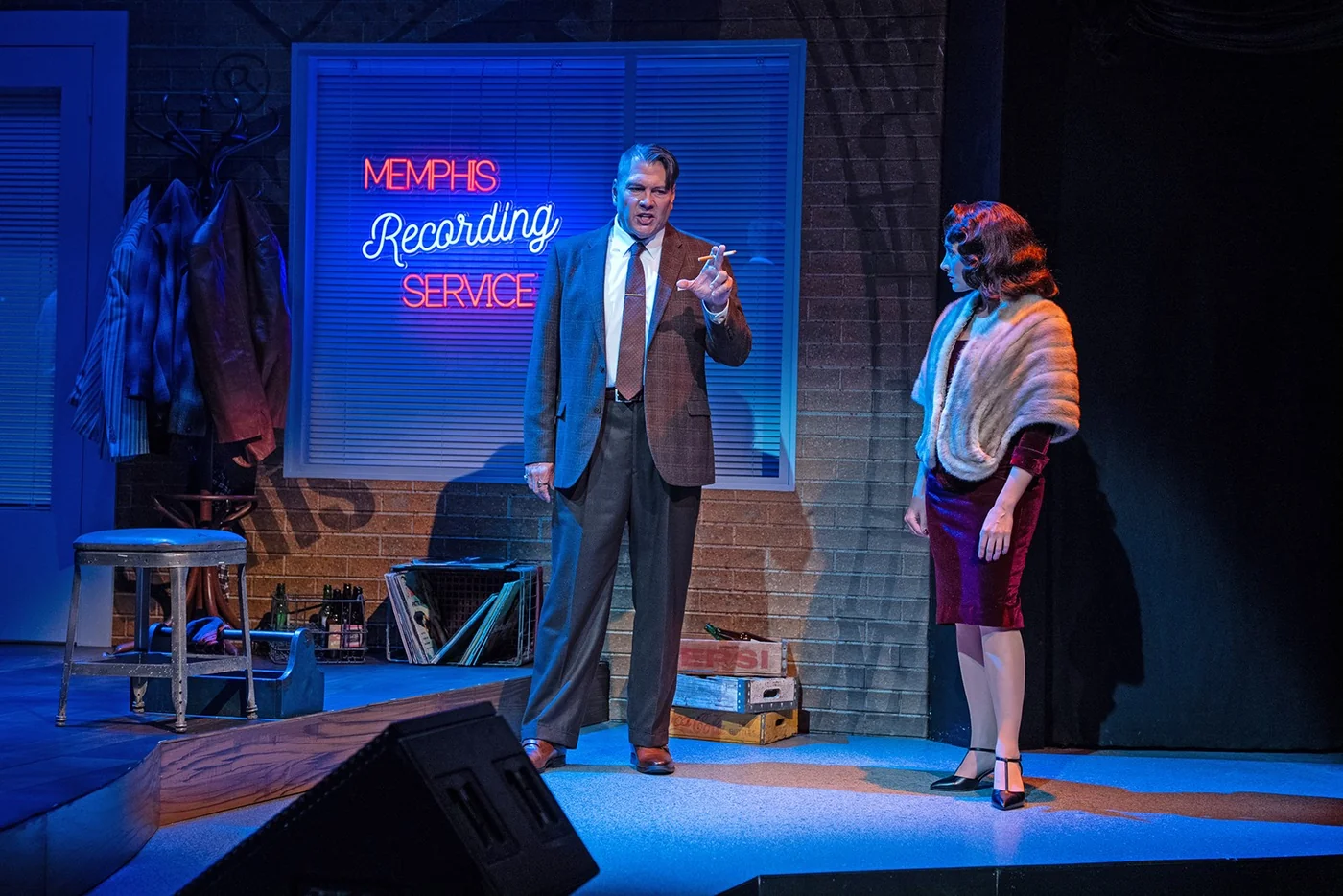
Michael Manuel and Ana Marcu in front of the Memphis Recording Service window. The brick and neon give this side of the room its own character. Photo by Scott Smeltzer/SCR.
When the room becomes a concert
I got the idea for the finale’s SUN sign from an image of Elvis singing “If I Can Dream” in his white suit in front of those giant red letters. You can see the individual lights tracing each letter, and you can see how big the whole thing is next to him. I wanted to do that with SUN behind our musicians. Graceland’s account of the 1968 special
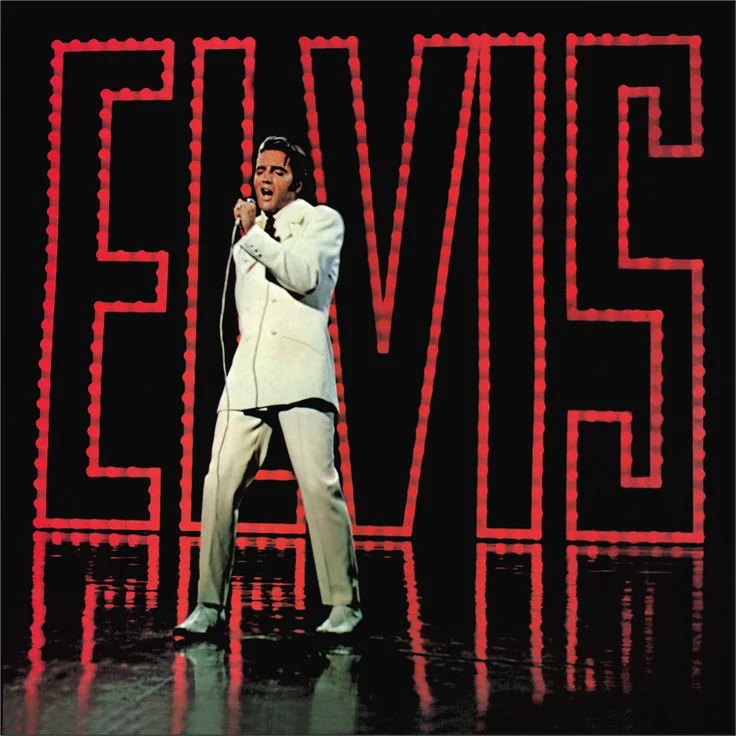
Elvis Presley performing “If I Can Dream” in the 1968 television special. The illuminated letters were a reference for the finale’s SUN sign.
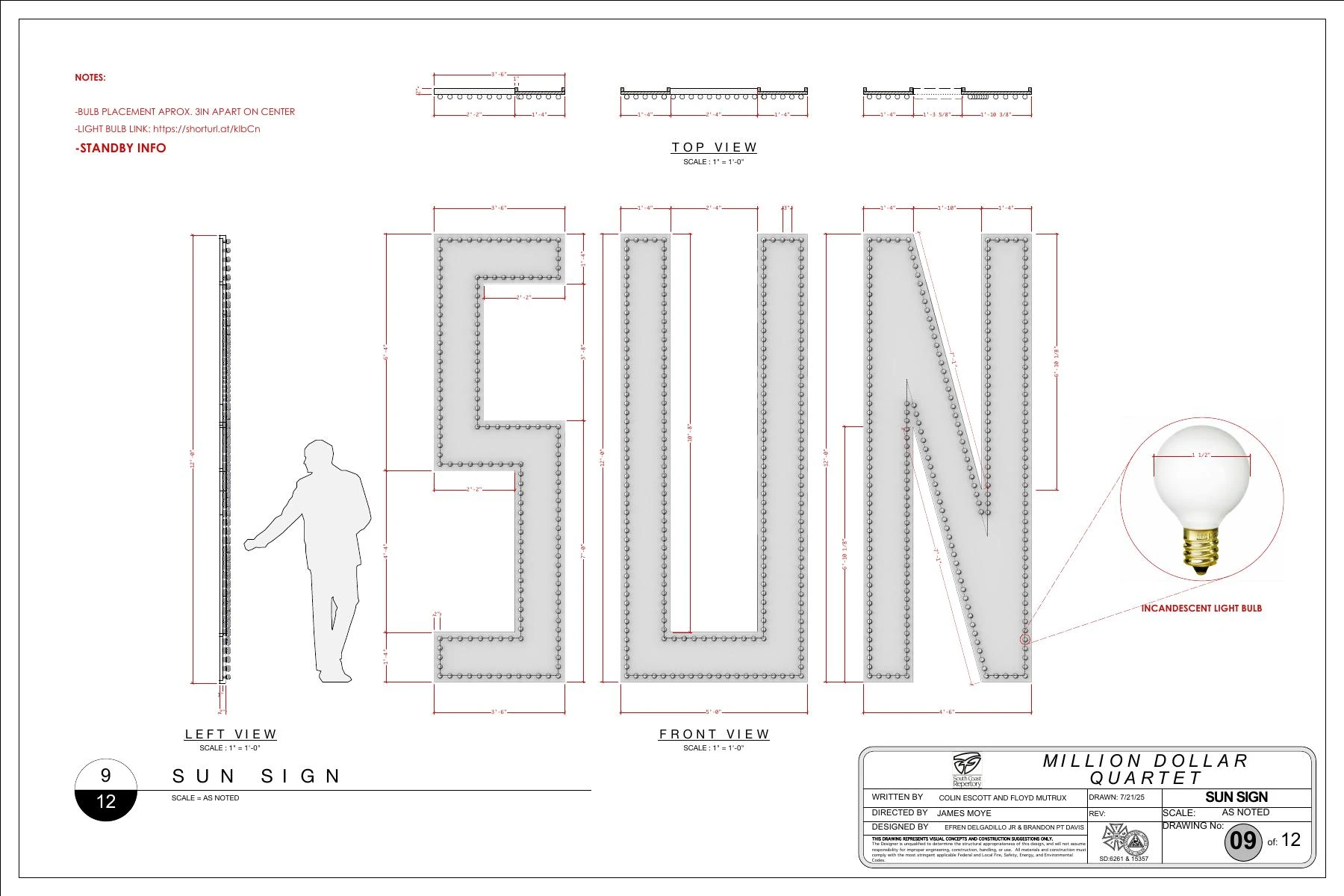
I used the Vectorworks model to test the size of the letters in the room and draw what the shop would need to build them. The Twinmotion camera move lets you look across the deck and see how much space SUN takes up. Then you get to the individual bulbs. There are 609 bulb positions drawn on plate 9. We alternated frosted and clear bulbs to stay within budget. The lights were always chasing, so the mix still read as one moving outline.
Watch the 20-second Twinmotion study
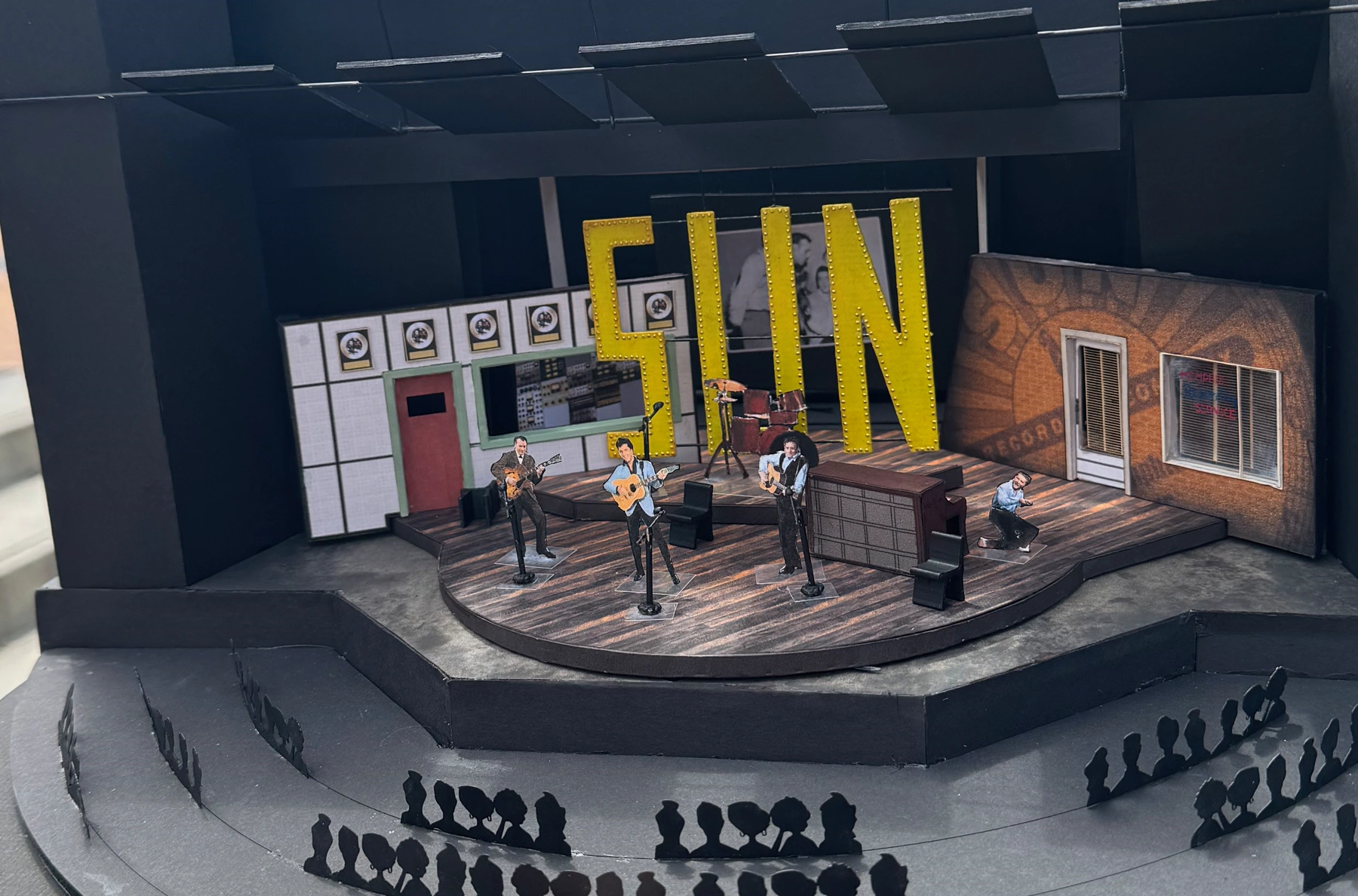
In the August 26 model photo you can see the whole sign between the booth and the brick wall. The seats in the foreground give you a sense of the audience’s angle. View the model photo.
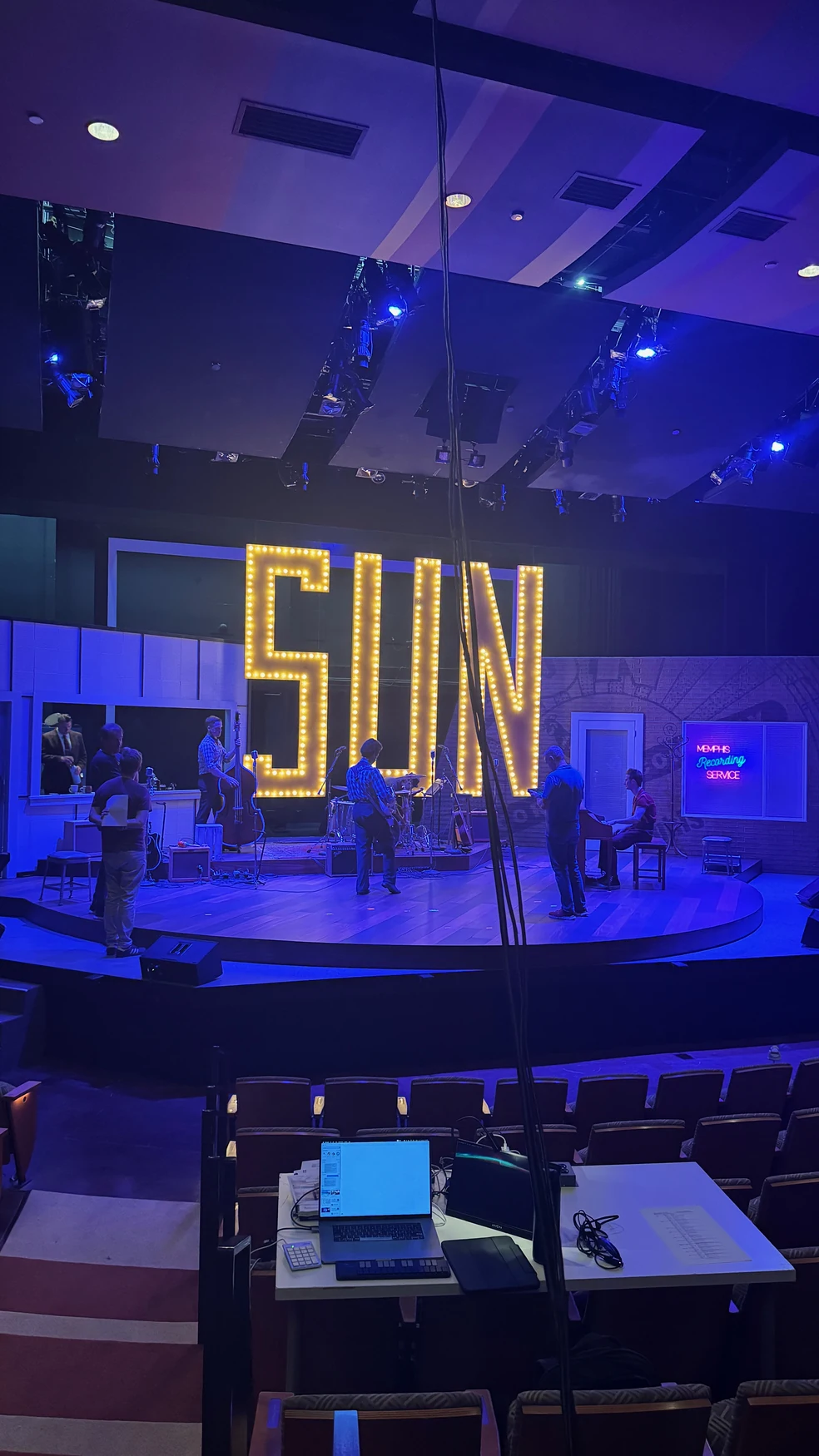
The September 9 view from the tech table, with the finished letters lit up. View the tech photo.
In tech, the booth window could still have its own little pool of activity, and the big SUN letters could pull your eye all the way across the stage. That was the change we’d been talking about since those first meetings. The room that made it possible to believe four musicians had come together for a recording session could make you feel like you were at their concert.
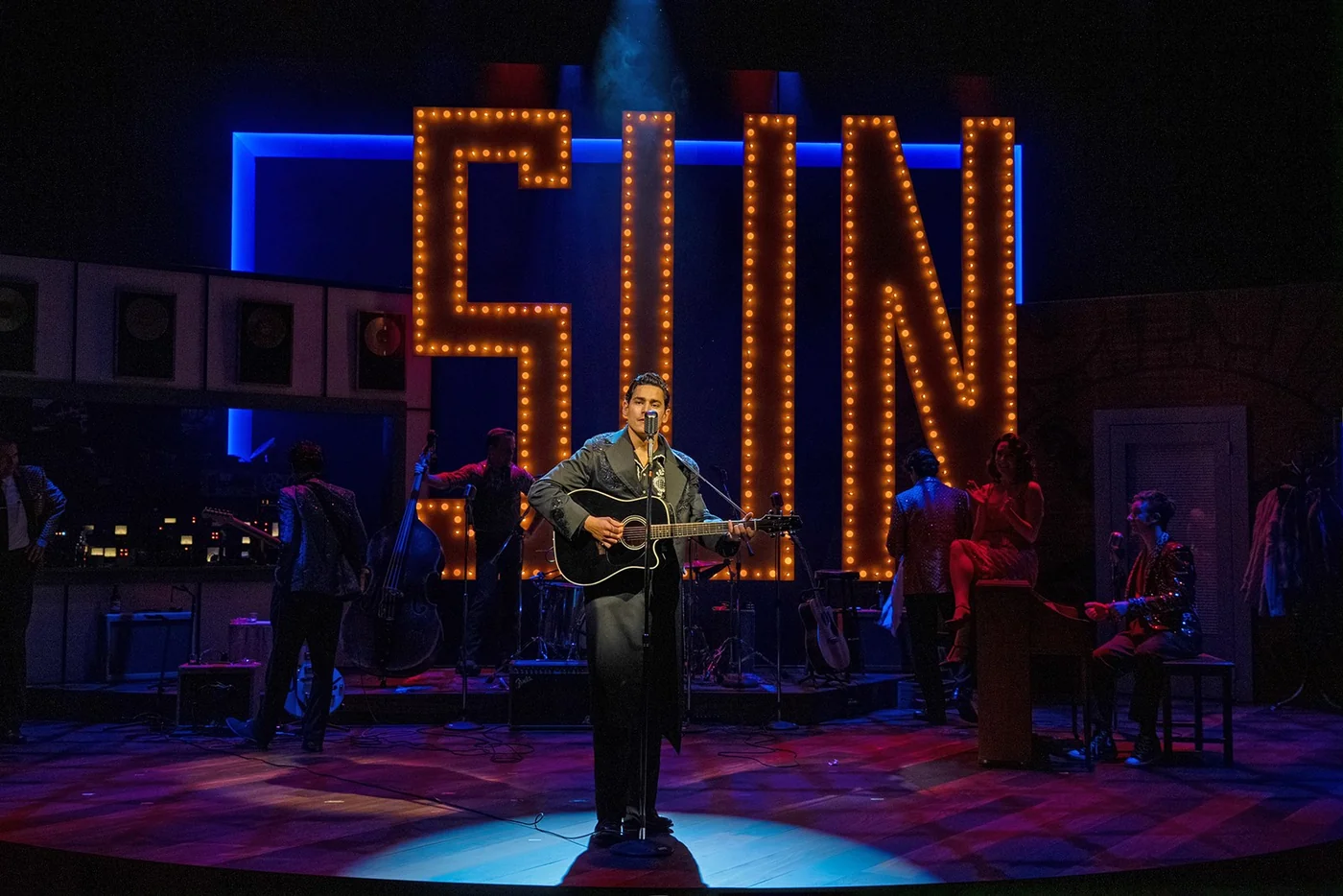
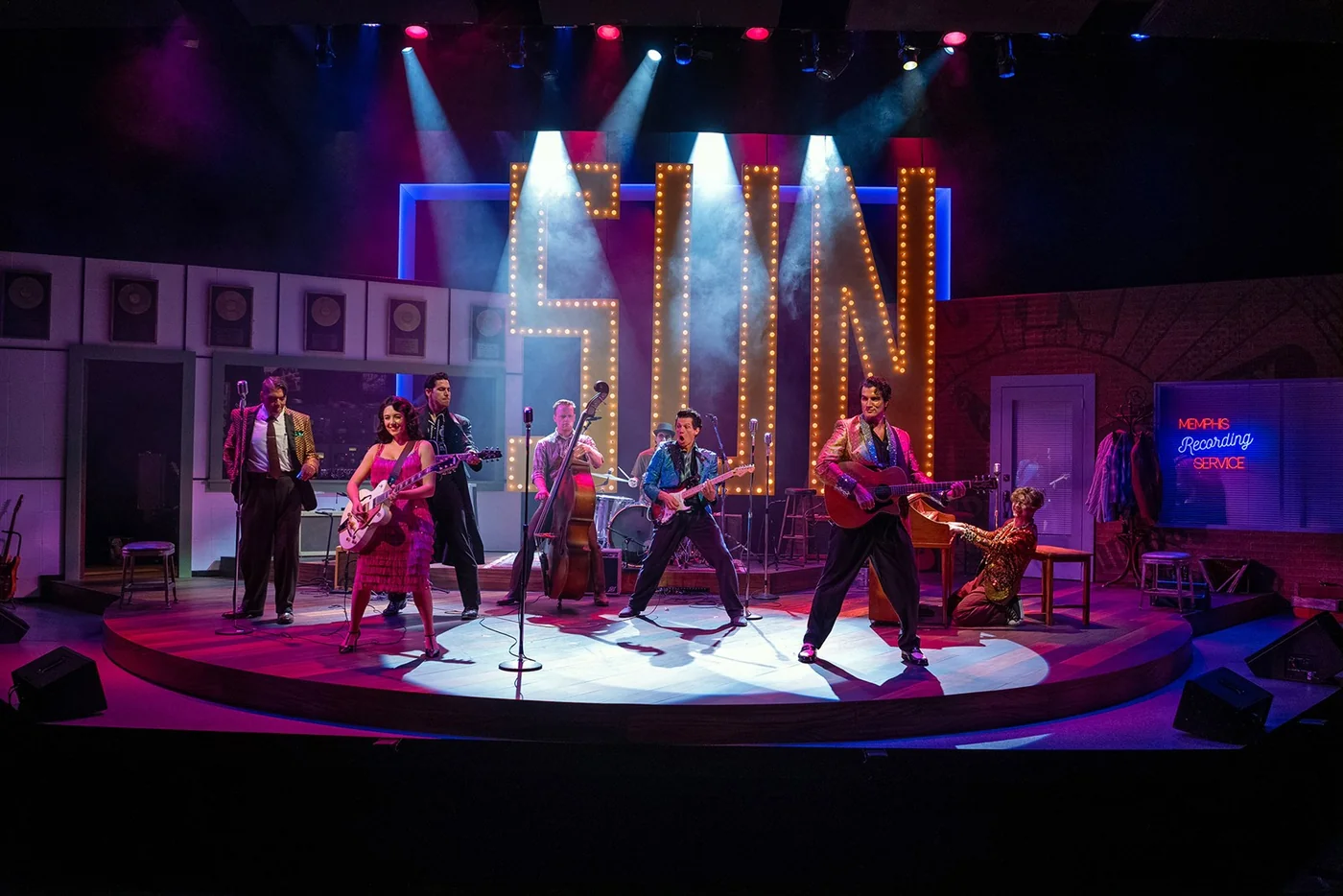
Chris Marsh Clark under the SUN sign, followed by a full-stage view with Clark, Michael Manuel, Ana Marcu, Wyatt Wireman, Austin Gutierrez, Armando Gutierrez, Rustin Cole Sailors, and JP Coletta. Photos by Scott Smeltzer/SCR.
View the full Million Dollar Quartet portfolio project
Efren Delgadillo Jr. and I co-designed the scenery with Rojin Bolandbakht as assistant scenic designer. Lonnie Rafael Alcaraz designed the lighting, Kish Finnegan the costumes, and Jeff Polunas the sound. Wiley DeWeese was music director. Maisie Chan was production manager, Kathryn Davies was production stage manager, Lauren Buangan was assistant stage manager, and Joanne DeNaut, CSA, was casting director. Full production credits.
Watch South Coast Repertory’s production video on YouTube
Inside the Season talkback
H Adam Harris and I talked about the booth, the Memphis brickwork, and the finale at South Coast Repertory on September 27, 2025.